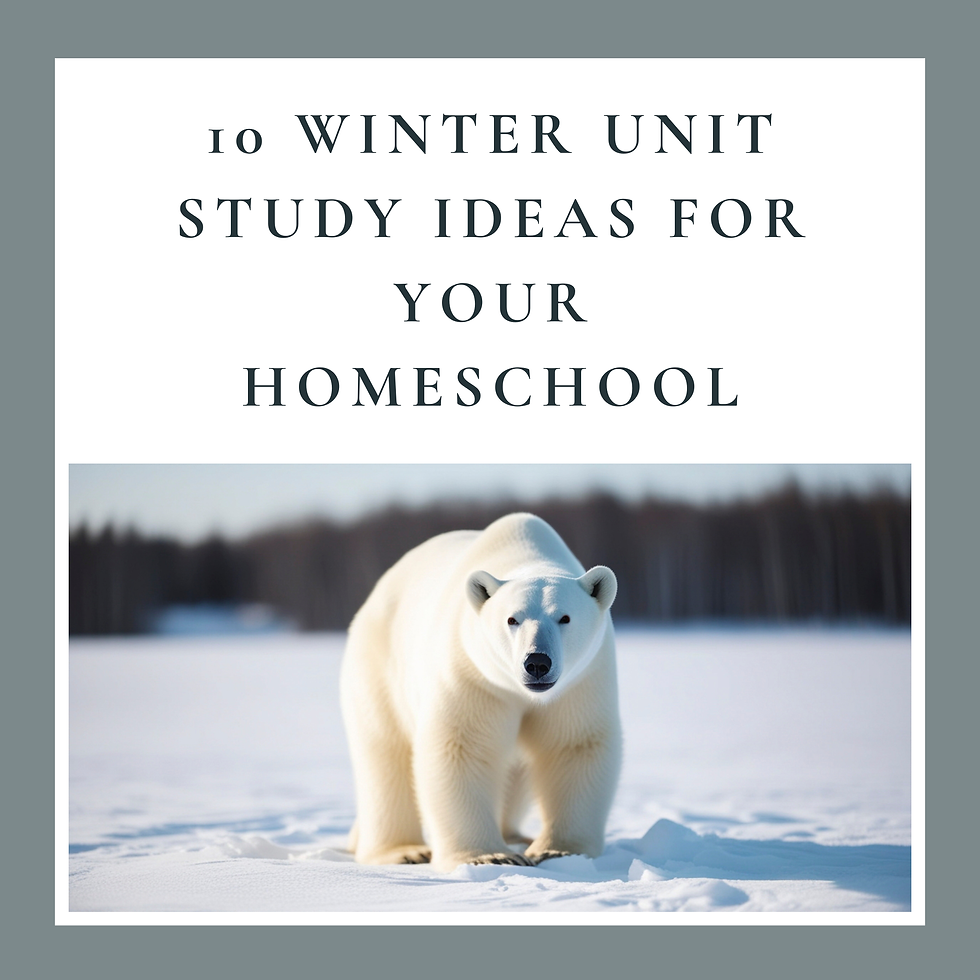
10 Winter Unit Study Ideas for Your Homeschool

Winter in our homeschool almost always looks different than fall.
The days are shorter. Everyone feels a little cozier. Attention spans shift. As much as we would like to we dont go outside as much in the freezing weather. And honestly? I’m not interested in dragging out a giant curriculum box when what we really need is connection, curiosity, and learning that feels alive.
That’s where winter unit studies shine.
As a homeschool family with multiple ages, I’ve come to love unit studies because they allow us to all gather around the same topic — yet each child can participate at their own level. No overwhelm. No juggling six separate lesson plans. Just shared learning, rich conversations, and the feeling that we’re discovering something new together.
Some weeks we go deep. Some weeks stay light. Penguins for two weeks. A short study on migration. A cozy dive into hibernation. It keeps our homeschool rhythm fresh, flexible, and joyful — and it keeps me from burning out too.
Why Winter Is the Perfect Time for Unit Studies
Winter naturally invites slower, deeper learning. We’re already spending more time indoors, reading together, and noticing what’s happening in nature outside our windows.
Unit studies fit beautifully into this season because:
They don’t require a massive curriculum overhaul
They allow you to follow curiosity
They work for multiple ages at once
They can be short and focused (a week or two , or even a day, is often perfect)
When paired with living books from the library and a simple printable unit study, winter learning becomes both meaningful and manageable.
How Living Books + Printable Unit Studies Work Together
Living books spark curiosity. They pull children into a topic through story, beautiful language, and real-life context. But on their own, facts can sometimes drift away as quickly as they’re discovered.
That’s where a printable unit study comes in.
Adding a printable unit:
Gently reinforces what was read
Helps children organize new information
Gives just enough structure to “cement” learning
Allows older kids to go deeper while younger ones stay engaged
I’ve found that this balance — books first, printables second — keeps learning from feeling heavy, while still giving it depth.
10 Winter Unit Study Ideas
1. Hibernating Animals
This is one of my favorite winter topics because it feels so right for the season.
As we read living books about bears, dormice, and forest animals preparing for winter, questions naturally come up:Why do some animals sleep?Do all animals hibernate the same way?What happens inside their bodies?
Our Hibernating Animals Unit Study builds on those questions by gently introducing ideas like hibernation, torpor, and brumation, along with animal-specific studies. It gives children a way to organize what they’re hearing in stories — without turning it into dry science.
2. Penguins & Life in Antarctica
Penguins never fail to capture attention — across all ages.
Books introduce their personalities and habitats, while printable activities help children remember details about species, climates, and survival strategies.
Our Penguin Unit Study works beautifully for family-style learning, with simple pages for younger children and deeper content for older ones.
3. Arctic & Inuit Life
What better time thanwinter to learn about the arctic, arcticanimals, and Cultures that have thrived in this environment.
Our Inuit / Arctic Unit Study was specifically created for little learners to gently introduce these subjects.
4. Migration (A Perfect One-Week Study)
Not every unit needs to last a month.
A short study on migration is perfect for winter — especially when children start noticing birds disappearing or animals changing behavior. One
week of living books paired with simple activities can spark lasting understanding.
5. Animals in Winter: Hibernate, Migrate, or Adapt
This unit naturally builds off hibernation and migration and helps children compare strategies. Living books make these concepts memorable, while printable charts and activities help children sort and retain information.
6. Evergreen Trees & Pinecones
Winter is a wonderful time to notice what doesn’t disappear.
Evergreen trees, pinecones, and winter buds offer endless opportunities for nature study. Pair library books with simple observation and journaling.
7. Winter Birds & Backyard Nature
Birds are one of the easiest winter animals to observe. A short unit on winter birds encourages children to slow down, watch carefully, and record what they see.
Living books + simple printables make this both educational and fun.
8. Snow & Ice Around the World
Winter looks different everywhere. Through stories and gentle geography, children can explore polar regions, snowy mountains, and cold climates around the globe — all from the couch with a stack of books.
9. Winter Poetry & Seasonal Literature
Not every unit study needs facts and diagrams. Some of our favorite winter learning moments come from poetry, seasonal stories, and quiet narration.
This kind of unit nourishes the soul as much as the mind.
10. Light & Darkness in Winter
Short days and long nights naturally lead to conversations about light, seasons, and rhythms. Living books help children notice, while gentle activities help them understand patterns without overwhelm.
Why Unit Studies Work So Well for Multiple Ages
What I love most about unit studies is that:
Everyone learns something
No one feels behind
Interest stays high
I don’t feel buried under curriculum
Each child can engage at their own level, and I can adjust based on energy, interest, and the season we’re in.
Winter learning doesn’t need to be heavy to be meaningful.
Bringing Winter Learning Together
If you’re craving a winter homeschool rhythm that feels peaceful, engaging, and manageable, unit studies are such a gift.
Pairing living books from the library with a printable unit study adds just enough structure to deepen learning — without overwhelming your children or yourself.
If you’d like to explore ready-to-use winter units that pair beautifully with living books, you can find our:
They were created for real homeschool families — juggling multiple ages, real life, and a desire to keep learning joyful.


.png)


Comments